

Custom software is becoming practical for more businesses
Ankit Arora
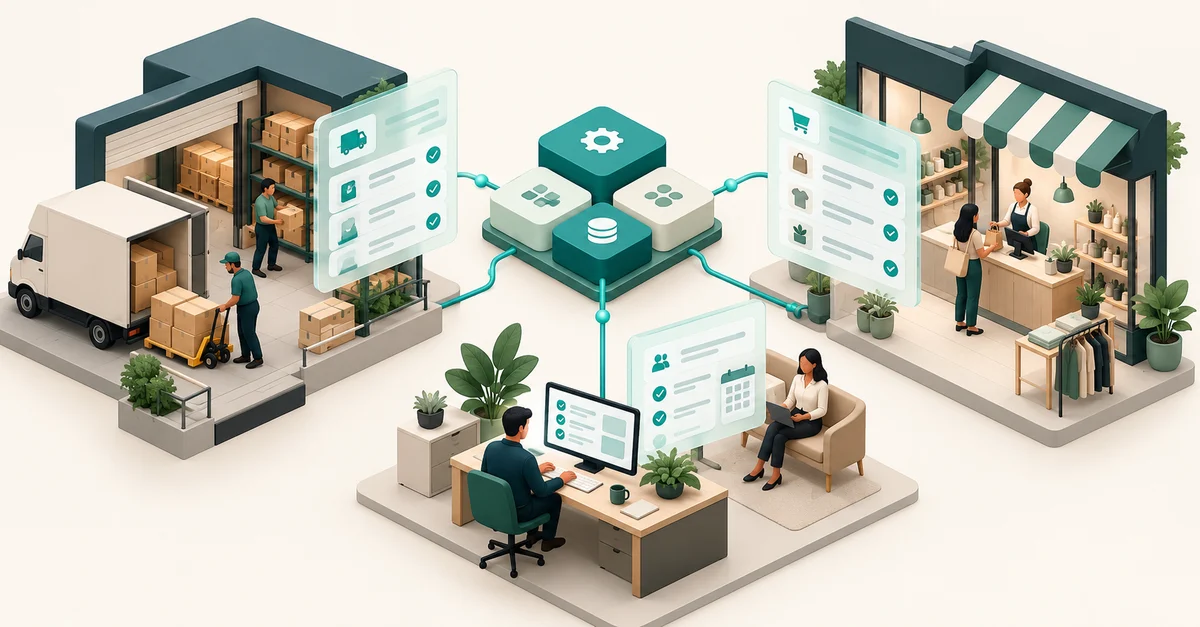
Why we pivoted Deployment.io from DevOps to AI agent-driven software development, testing, and delivery.
About six months ago, we decided to change the direction of a business that was already working.
We started Deployment.io in 2023 to make it easy for anyone to deploy applications on AWS. The product was generating enough revenue for us to bootstrap and grow organically.
In early 2026, Opus 4.6 changed my view of how much engineering work agents could take on. Its improvements in sustained coding, code review, and debugging made me question whether deployment alone was enough to build our next ten years around.
I began to believe that software built around a business’s particular needs could become practical for far more businesses. Helping them get that software into use would mean taking responsibility for development, testing, and delivery.
Why changing direction was difficult
Changing direction meant taking time away from a product that already earned revenue. We chose to build on our deployment experience and take on development, testing, and delivery as well.
More software becomes worth building
Standard software spreads development and operating costs across many customers. It brings established workflows, integrations, and support. Those remain strong reasons to buy it.
But a poor fit has a cost. People move information between systems, maintain spreadsheets for exceptions, and remember rules the software cannot express. Some workflows end up running outside the software.
A custom application can close that gap, provided the benefit justifies the cost of building and maintaining it. Where agents reduce the effort required, projects that were too expensive can start to make economic sense.
The opportunity that interests me most is software a business has never commissioned because it could not justify the cost. A workflow can be valuable to one organization without a market for selling the same application to thousands of others.
Software shaped around a particular business
Different businesses have different tech stack requirements, from programming languages and databases to cloud infrastructure and integrations. Custom software needs to fit those requirements and the systems already in place.
Consider a distributor with good accounting and inventory systems, but its own rules for pricing, order approval, and delivery scheduling. The awkward part is the process between those systems: checking customer terms, approving exceptions, and telling operations what happens next.
A tailored application could bring those steps together while keeping the existing systems for what they do well. Employees would have one place to manage the workflow, with fewer repeated entries and less dependence on unwritten rules.
That application might be an internal tool, a customer portal, or an integration. It could also be delivered as an ongoing service, with a provider responsible for building, operating, and improving it.
The customer would not have to become a software company to benefit from software built for it.
The cost of owning software still matters
An application still needs to connect to existing systems, protect access to data, survive dependency changes, and recover when something goes wrong. Requirements will change too: approval rules, supplier interfaces, and team permissions will need updating.
Someone has to own that work. Cheaper implementation alone does not make custom software economical.
That is why I care about the system around the coding agent. More code creates more work to inspect unless planning, review, testing, and operations improve with it.
The person who understands the business still needs to define what should happen, explain exceptions, and decide what is acceptable. Engineers still need to judge design, security, and the consequences of a change. Agents need to support that judgment throughout delivery.
What we’re building
At Deployment.io, we’re building the full path from a business requirement to software running in the customer’s cloud. Agents help implement, review, and test changes, while people retain engineering judgment and the decision to ship.
The next ten years
In 2023, we wanted to make deploying software accessible to more people. Today, we want to make building, delivering, and improving it accessible to more businesses.
I expect more businesses to commission software for the parts of their operations that make them different. They will need clear specifications, sound engineering, reliable delivery, and someone accountable for keeping it working.
Making those capabilities accessible is a business I want to spend the next ten years building.